


The clanization of polity and youth in post–civil-war Somalia: Civic duty, community awakening, and the struggle for national renewal (1991–2025)
Abstract
More than three decades after the collapse of the Somali state in 1991, Somalia’s youth—the largest and most dynamic part of its population—remain trapped between structural clan fragmentation, economic marginalization, foreign interference, and unhealed trauma. This article examines the “clanization” of politics and society in post-civil-war Somalia and its destructive impact on patriotism, nationalism, and civic identity among Somali youth. Drawing on the author’s own works, The Origins of Somali Civil War and Somalia’s Dysfunctional Clan Federalism, as well as wider scholarship and policy reports, the article traces the historical roots of division, critiques the 4.5 clan-based federal formula, analyzes the youth question in a clanized polity, and explores the tragedy of forced migration and Mediterranean death routes. It contrasts the patriotic, panSomali legacy of the Somali Youth League (SYL) with today’s fragmented generation, offers comparative lessons from other African contexts, and proposes a civic-duty-based framework for community awakening. The conclusion argues that Somalia will only be reborn when its youth reclaim a national ethic rooted in unity, service, and resistance to clan ideology and foreign domination.
I. Prologue – Awakening a Generation
Somalia stands at a moral and historical crossroads. More than thirty years after the disintegration of the state in 1991, the country’s most important resource— its youth—has been turned into fuel for war, corruption, and migration rather than a force for national renewal. Young Somalis are conscripted into clan militias, hired as digital soldiers in online hate campaigns, trafficked along deadly routes through the Sahara and Libya, and drowned in the Mediterranean in search of an imagined future in anti-Black, anti-refugee Europe. Others remain in internally displaced camps, trapped in unemployment, khat-fuelled despair, and psychological exhaustion.
Yet Somalia was not always like this. In 1943, thirteen young men in the Somaliinhabited Ogaden founded the Somali Youth League (SYL), a movement that rejected colonial fragmentation and tribal division and instead articulated a new political identity: One Somalia, one people, one language, one destiny. SYL mobilized workers, pastoralists, students, and religious leaders into a pan-Somali nationalist project that led to the unification of British Somaliland and Italian Somalia and the birth of the Somali Republic on 1 July 1960.[1] For a brief historical moment, Somali youth became the engine of independence, unity, and dignity.
The central paradox of contemporary Somalia is therefore stark. The same society that produced the SYL generation—disciplined, selfless, pan-Somali in outlook— has now produced a generation that is fragmented, manipulated, and disillusioned. This article argues that this transformation is not the result of some innate “tribal” character but the product of deliberate political and economic processes: colonial divide-and-rule, Cold War militarization, authoritarian rule, structural adjustment, state collapse, warlordism, and above all the institutionalization of clan as the basic organizing principle of the post-2000 political order.
II. Historical Roots of Division
In The Origins of Somali Civil War, Egal and KrishnaKanth show that the conflict cannot be reduced to “ancient clan hatreds”.*2+ Rather, colonial administrations in British Somaliland, Italian Somalia, and Ethiopian-ruled Ogaden rigidified flexible kinship networks into administrative units, courts, and military auxiliaries.[3] Colonial rulers empowered certain clan lineages as tax collectors, headmen, and intermediaries while punishing those who resisted. They created borders that divided Somali-inhabited territories into five parts, undermining the very idea of Somali unity.
After independence, the SYL tried to build a national project that transcended these divisions. But the young republic quickly became entangled in Cold War rivalries. The 1969 military coup led by General Maxamed Siyaad Barre initially deepened the nationalist project, promoting literacy, women’s participation, and Somali language development. The regime declared clanism a political disease and symbolically “buried” it at Conis Stadium in Mogadishu—an event deeply remembered by many Somalis of that generation.
However, the Ogaden War (1977–78), shifting Cold War alliances, economic crisis, and internal repression gradually eroded the regime’s legitimacy.*4+ Structural adjustment programs weakened the state; patronage and favoritism returned in new forms; and the regime increasingly relied on security forces organized along clientelistic and clan lines. By the late 1980s, armed opposition movements emerged, some of them mobilizing explicitly on clan identities. When the regime fell in 1991, there was no agreed national framework or institution strong enough to manage the transition. The state collapsed into what Ken Menkhaus has called “ordered anarchy”.*5+
It is in this historical context that clan militias, warlords, and business cartels replaced the national state and claimed to represent “their” communities. The civil war was thus less a spontaneous eruption of clan enmity than a violent privatization of political authority under conditions of external meddling, economic collapse, and ideological vacuum.
III. Somalia’s Dysfunctional Clan Federalism
In your 2020 paper, Somalia’s Dysfunctional Clan Federalism, you describe the 4.5 power-sharing arrangement as a form of clan apartheid.[6] The formula assigns parliamentary seats based on pre-agreed clan families plus a 0.5 share for “minorities,” thereby freezing fluid social identities into rigid political quotas. It rewards those actors who can present themselves as “owners” or gatekeepers of large clan blocs and turns public office into an extension of private lineage power.
Rather than providing genuine federalism or local autonomy, 4.5 produces a cartel of warlords, businessmen, and diaspora politicians who negotiate positions in hotels under foreign supervision. These individuals are not elected by citizens but selected by clan elders and external sponsors. Once in office, they distribute positions and resources within narrow patronage networks, while the majority of youth—who have no elders, no money, and no diaspora connections—are entirely excluded.
This system has several devastating consequences:
- It destroys the idea of citizenship as an equal legal status.
- It blocks the emergence of cross-clan political parties and issue-based movements.
- It keeps Somalia in permanent dependency on foreign mediation and money.
- It produces what you call “recycled politicians”: the same elite figures rotating between ministries, parliaments, and “opposition” roles since 2000.
- It undermines meritocracy and professionalism in public administration.
- The 4.5 system is therefore not a neutral compromise; it is a structural obstacle to national healing and youth empowerment.
IV. The Youth Question in a Clanized Polity
Somali youth born after 1991 have grown up without a functioning state, without a coherent national curriculum, and without direct memory of the independence struggle. Many have known only checkpoints, militias, NGOs, foreign troops, and the empty theatre of “transitional” politics. The overwhelming majority are unemployed or underemployed; estimates consistently place youth unemployment at over 70 percent.[7]
In such a context, the only accessible “institutions” for many young people are:
Clan elders and their patronage networks; militias and armed groups; religious movements; NGO projects with short-term funding cycles; the informal economy, including khat trade and smuggling.
Politicians use youth primarily as instruments. They pay them to attend rallies, to attack opponents on social media, or to fight in localized clan wars. When elections or selection processes end, these young people are discarded, often without salaries, protection, or psychological care.
Digital technology has amplified the problem. Platforms such as TikTok, Facebook, and WhatsApp host a constant stream of clan-based propaganda, humiliation campaigns, and fake news. Diaspora-based “influencers” mobilize youth in Mogadishu, Kismayo, Garowe, and Hargeisa into online wars that deepen mistrust and normalize hate speech.
As a psychiatrist and mental-health clinician, I have observed the deep psychological cost of this environment: chronic anxiety, complex trauma, depression, and an erosion of trust even within families. In such conditions, the idea of national belonging appears abstract, while the clan offers immediate (if fragile) forms of protection and identity.
V. From SYL to the “Lost Generation”
The contrast between the SYL generation and today’s “clan generation” is central to your argument. The SYL was a youth movement that organized literacy campaigns, political education circles, and peaceful mobilization across all Somali territories. Its members were not driven by sub-clan quotas or diaspora money; many were poor, self-taught, and deeply committed to a vision of Somaliweyn— Greater Somalia.
SYL leaders negotiated with colonial powers, built alliances with other African liberation movements, and created the first Somali constitution and
parliamentary structures. They governed, imperfectly but seriously, from 1960 to 1969, during which time Somalia enjoyed relatively free elections and a reputation as a promising democracy in Africa.[8]
By contrast, the post-1991 generation has been largely denied meaningful participation. They have inherited a landscape of checkpoints, private militias, khat houses, and donor-driven NGOs. Their energies are drained by survival rather than directed toward collective projects. The result is what many elders call a “dhaxal xumo” — a tragic inheritance of division, not because youth are inherently worse, but because they have been systematically betrayed.
SDR (Kacaanka) use of historical images and slogans from the 1960s—such as the patriotic lines “Inaan qabiilka dhaafno / Dheregna aynu gaarno / Cudurkana dhameyno”—is a powerful reminder that Somalis once consciously diagnosed clanism as a social disease and mobilized culture, music, and art against it.
So too is Amin Arts’ 2014 cartoon “Dugsi Maleh Qabyaaladu”, which depicts Somalis killing one another in an endless chain of self-destruction. Together, these visuals show that the battle against clan ideology has been waged for decades; what is new is the scale of the current defeat.
VI. Migration and the Mediterranean Death Routes
One of the most painful consequences of the clanized order is mass migration.
Tens of thousands of young Somalis have embarked on journeys through Ethiopia,
Sudan, and Libya towards the Mediterranean, where many have drowned or disappeared into detention camps. IOM and UNHCR reports document thousands of deaths along these routes, but the real numbers are undoubtedly higher.[9]
Somali youth in Libya face slavery, extortion, rape, and torture. Videos of young men being beaten while relatives are forced to listen over the phone have circulated widely. Those who manage to reach Europe confront racism, precarious legal status, and social isolation. Many experience post-traumatic stress and survivor’s guilt, having watched companions die in the desert or at sea.
Crucially, this migration is not simply “economic”. It is a form of forced exile produced by the combined effects of political corruption, lack of justice, and lack of prospects. The decision to leave is often described by youth as a choice between “slow death at home” and “quick death on the road”.
In moral terms, the responsibility lies not only with European border regimes but with Somali elites who have looted public resources, sold public land, and maintained a political system that offers nothing to the majority of young citizens.
VII. Comparative Lessons from Africa
Somalia is not unique in facing ethnic or clan fragmentation. Other African countries have confronted similar problems and found partial solutions that may offer lessons.
In Rwanda, after the 1994 genocide, the state removed ethnic categories from identity cards, established community-based Gacaca courts, and launched national civic education programs aimed at building a single Rwandan identity.[10] In Tanzania, Julius Nyerere emphasized Kiswahili as a unifying language and promoted ujamaa socialism, which, despite its economic failures, succeeded in largely de-tribalizing politics.[11] Ghana, after periods of instability, strengthened anti-corruption institutions and electoral accountability, allowing for relatively peaceful alternations of power.[12]
Somalia cannot simply copy these models, but it can learn from their key principles:
Depoliticizing lineage and clan_affiliation; establishing civic education and national service; building credible anti-corruption mechanisms; and institutionalizing leadership turnover.
VIII. Civic Duty and Community Awakening
The central positive argument of this article is that Somalia requires a civic awakening anchored in youth. Clanization is not just a political arrangement; it is a moral collapse. The antidote is a new ethic of civic duty.
I propose six pillars for such an awakening:
National Civic Education – integrating Somali history, SYL legacy, rights and duties of citizenship, and critical perspectives on clanism into all levels of schooling and madrassa teaching.
- National Youth Service – a six to twelve-month program where youth from different regions and clans serve together in rebuilding schools, health posts, environmental projects, and peace building initiatives.
- Volunteer Corps – district-level youth groups engaged in community cleanups, mediation, literacy campaigns, and mental-health peer support.
- Youth Anti-Corruption Leagues – networks of young citizens monitoring local public projects, tracking budgets, and using lawful channels and media to expose theft and mismanagement.
- Cultural Renaissance – support for Somali arts, theatre, poetry, and film that promote a shared national narrative rather than narrow clan pride.
- Digital Civic Guard – youth trained in media literacy, fact-checking, and countering online hate, turning social media from a battlefield into a space for peace messaging and civic debate.
These pillars are not utopian; they are practical steps that can be initiated by universities, mosques, NGOs, diaspora groups, and local councils—even before the central state is fully reformed.
IX. Youth Demands and the 2026 Elections
The approaching 2026 electoral cycle is a critical moment. If the existing pattern continues—closed-door clan bargaining under foreign supervision—Somalia will lose another decade. Youth must therefore articulate specific, non-negotiable demands:
1. Universal suffrage and movement away from indirect clan selection.
2. Transparent vetting of candidates, including asset declarations, criminal checks, and conflict-of-interest reviews.
3. Public debates focused on education, health, employment, security, and foreign policy rather than clan slogans.
4. End to foreign financial and military interference in candidate selection, especially by Gulf states and neighboring countries.
5. Constitutional term limits: no individual should serve more than two consecutive four-year terms (2×4) in either the House of the People or the Senate, whether selected or elected. This would break the culture of lifelong parliamentarians and open space for new leadership.
These demands will not be granted voluntarily; they must be advanced through peaceful mobilization, petitions, media campaigns, and coordinated civil-society action. Youth should refuse to serve as the rented crowd or online thugs of any politician who does not commit publicly to such reforms.
X. Toward a New Political Ethic
At the heart of your argument is a call for a new political ethic in Somalia. Politics must be redefined from a struggle for spoils between clans to a vocation of service and stewardship. This requires:
- Leaders who see themselves as guardians of public goods, not owners.
- Merit-based appointments in the civil service and security forces.
- Transparent, audited public finances.
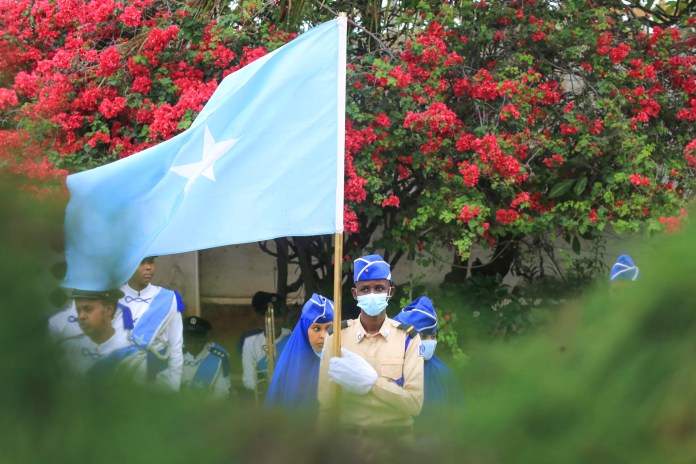
- Restoration of national symbols and rituals that reinforce unity: flag ceremonies, national holidays, remembrance of SYL martyrs, and public recounting of the anti-colonial and anti-clan struggles.
Foreign policy must also be re-anchored in sovereignty. Somalia cannot afford to be a battlefield for the rivalries of the UAE, Qatar, Turkey, Ethiopia, or Western security agendas. Youth must insist that their country is not for sale.
XI. Conclusion – From Clan to Nation
Somalia’s tragedy since 1991 has not been written by fate; it has been produced by human decisions: by warlords, corrupt politicians, foreign powers, and international agencies more interested in “managing” crises than resolving them. But history also shows that Somalis, especially Somali youth, are capable of extraordinary courage and creativity.
The SYL generation defeated colonial rule and created a republic from nothing. Their spirit lives on in the memories, songs, and symbols you have resurrected: the anti-clan slogans, the patriotic music of the 1960s, the official burial of clanism at Conis Stadium, and even the modern cartoons of Amin Arts. These are not relics; they are resources for a new struggle.
The choice before today’s youth is simple but profound:
Remain prisoners of clan, or become citizens of a republic.
If they choose the latter—through study, organization, civic courage, and refusal to be used as instruments of division—Somalia can move from fragmentation to renewal. If they do not, migration boats will continue to fill, militias will continue to recruit, and the dream of Somaliweyn will fade into nostalgia.
Somalia will rise again the day its youth decide to become a nation, not a collection of clans.
By: Bischara Ali Egal
Horn of Africa Center for Strategic and International Studies (HornCSIS) Canada Specialized Hospital Inc. – Mogadishu
About the Author:
Dr. Bischara Ali Egal is a Somali-Canadian scholar, psychiatrist, mental-health expert, political analyst, and one of the most uncompromising voices on Somali sovereignty, governance reform, and Horn of Africa geopolitics. With over 40 years of professional experience spanning Canada, Somalia, and the international arena, he combines deep academic training with frontline social, clinical, and strategic expertise.
A psychiatrist, social-policy specialist, and former youth-offender clinician in the Canadian North (NWT & Yukon), Mental Health policy Advisor/Consultant with Federal Govt. of Canada HQs 1986-92 in Ottawa, Canada. , Dr. Egal later became one of the earliest post-civil war nation-builders in Somalia. In 1998 he founded Canada Specialized Hospital Inc., one of the first two psychiatric hospitals established in Somalia after state collapse — a landmark institution that restored mental-health care to a war-traumatized population.
He is also the Founder & Executive Director of the Horn of Africa Center for Strategic & International Studies (HornCSIS), an independent think tank headquartered in Ottawa and Mogadishu, dedicated to high-integrity geopolitical analysis, anti-neocolonial research, and sovereignty-focused policy development for Somalia and the Horn region.
Dr. Egal is a veteran analyst of: clanism and post-1991 political fragmentation foreign intervention & hybrid warfare in Somalia,Red Sea and Horn geopolitics, Turkish, Gulf, and UAE strategic agendas, youth marginalization, migration, and mental health, governance, corruption, and elite capture, neocolonial pressure on fragile states, economic dependency and sovereignty erosion.
He has authored major articles, white papers, and scholarly manuscripts exposing the structural roots of Somalia’s crisis and proposing a nationalist, dignified policy path forward. His work is widely read by Somali intellectuals, diplomats, youth, diaspora communities, and regional policymakers.
Dr. Egal is recognized for his fearless, evidence-driven, nationalist scholarship, unafraid to challenge corrupt elites, foreign exploitation, and externally imposed agendas. His research blends historical depth, clinical insight, and geopolitical clarity — giving him a unique authority unmatched by typical political commentators.
Today, he stands as one of Somalia’s most consistent voices for sovereignty, territorial integrity, transparency, constitutionalism, and national dignity — advocating relentlessly for a Somalia free from foreign manipulation and internal decay.
Bibliography
Amnesty International. Libya’s Dark Web of Detention and Extortion. London: Amnesty International, 2018.
Cassanelli, Lee. The Shaping of Somali Society. Philadelphia: University of Pennsylvania Press, 1982.
Crisis Group. Somalia and the Dangerous Politics of Federalism. Brussels: International Crisis Group, 2018.
Cusmaan, Cabdulqaadir H. Taariikhda SYL 1943–1960. Hargeysa: Gollis Press, 2008.
Deng, Francis. War of Visions: Conflict of Identities in Sudan. Washington, DC: Brookings Institution, 1993.
Diamond, Larry. Developing Democracy. Baltimore: Johns Hopkins University Press, 1999.
Egal, Bischara Ali. Somalia’s Dysfunctional Clan Federalism. Academia.edu, 2020.
Egal, Bischara Ali, and T. KrishnaKanth. The Origins of Somali Civil War. Academia.edu, 2021.
Hansen, Stig Jarle. Al-Shabaab in Somalia. Oxford: Oxford University Press, 2013.
Hoehne, Markus. “Political Identity and Emerging State Structures in Northern Somalia.” Journal of Modern African Studies 44, no. 3 (2006): 397–414.
International Organization for Migration (IOM). Missing Migrants Report: Horn of Africa to Libya Route. Geneva: IOM, 2020.
Kapteijns, Lidwien. Clan Cleansing in Somalia. Philadelphia: University of Pennsylvania Press, 2013.
Lewis, I. M. A Modern History of the Somali. Oxford: James Currey, 2002.
Mazrui, Ali. The African Condition. Cambridge: Cambridge University Press, 1980.
Menkhaus, Ken. “State Collapse and the Threat of Violence in Somalia.” New York: Council on Foreign Relations, 1996.
Samatar, Abdi Ismail. “Destruction of State and Society in Somalia: Beyond the Tribal Paradigm.” Journal of Modern African Studies 30, no. 4 (1992): 625–641.
Samatar, Ahmed I. “The Idea of Somalia.” Horn of Africa Journal, 1988.
Straus, Scott. The Order of Genocide: Race, Power, and War in Rwanda. Ithaca: Cornell University Press, 2006.
UNHCR. Central Mediterranean Sea Arrivals and Refugee Deaths Report. Geneva: UNHCR, 2023.