

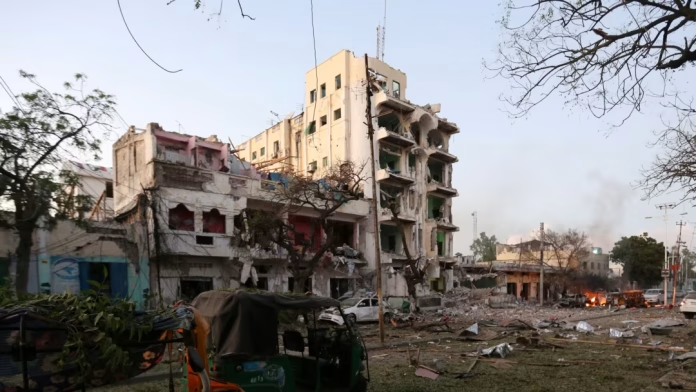

Mogadishu, Somalia – More details have emerged about the deadly explosion that struck the Ambassador Hotel in Mogadishu on Wednesday afternoon, an attack claimed by the Al-Shabaab militant group, which has waged an insurgency against Somalia’s internationally backed government for more than a decade.
Officials said at least 20 people were killed in the assault, including two members of the Federal Parliament: Abdullahi Hassan Jama, known as Kabaweyne, and Mahmoud Mohamed Guure. More than 60 others were injured, among them Abdihafiid Mohamed Hersi, the head of protocol for the Banadir governor and Mogadishu mayor.
Authorities confirmed that Hersi sustained serious injuries and is currently receiving treatment at Banadir Hospital. Mogadishu Mayor Yusuf Hussein Jimale (Madaale) visited him on Thursday, condemning the attack as “a brutal act of terror targeting Somalia’s progress.”
Witnesses and security sources said the assault began with a suicide car bombing at the hotel’s gate, followed by armed militants who stormed the premises and exchanged gunfire with security forces for several hours.
The explosion caused extensive damage to nearby buildings and vehicles in the busy KM4 area, one of Mogadishu’s main intersections.
Civilians, lawmakers, and security personnel were among the dead, while emergency services struggled to rescue survivors amid continuing gunfire. Police said they later secured the building and killed the remaining attackers.
The Ambassador Hotel, located near government offices and embassies, was a known gathering place for lawmakers and officials. Al-Shabaab claimed responsibility, saying it had targeted government representatives.
The attack was part of a broader campaign by Al-Shabaab to strike heavily guarded hotels and public places in Mogadishu. The group, which once controlled large swathes of southern Somalia, has continued to carry out bombings and assassinations despite losing territory to Somali and African Union forces.
Since being ousted from Mogadishu in 2011, Al-Shabaab has mounted frequent attacks against hotels, restaurants, and government compounds in the capital — including deadly sieges at the Jazeera Palace Hotel in 2015 and the SYL Hotel in 2016.
The Ambassador Hotel bombing underscored Somalia’s fragile security situation ahead of the country’s planned elections that year, highlighting Al-Shabaab’s ability to strike symbolic targets in the heart of the capital despite intensified counterterrorism operations.
Somali authorities vowed to strengthen security measures in the capital and accelerate efforts to stabilize the city. “These attacks will not deter us from our mission to rebuild Somalia,” said Interior Ministry officials in the aftermath of the blast.
The United Nations, African Union, and regional governments condemned the attack and reiterated their support for Somalia’s fight against terrorism.